
Has gold lost its sparkle?
29 July 26
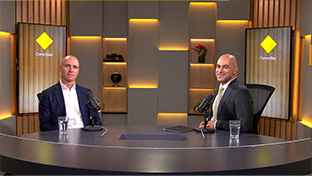
An interview with Westgold Resources Managing Director and CEO Wayne Bramwell on the quarterly results, the outlook for gold and why scale is becoming increasingly important across Australia's gold sector.
Gold prices have retreated sharply after a stellar run in 2025, prompting questions over whether the precious metal has lost some of its shine.
Westgold Resources Managing Director and CEO Wayne Bramwell discusses the outlook for gold, the company's four-year transformation and why he believes Australia's gold sector is entering a new phase of consolidation.
He also explains why Westgold has remained unhedged, how the company is managing costs in a volatile environment and the operational strategy designed to support future growth.
Watch the full interview
Or scroll down for a quick summary
Westgold delivered record production in FY26.
The company remains one of the ASX's largest unhedged gold producers.
Consolidation across Australia's gold sector is expected to continue.
Strong cash generation and disciplined cost management underpin Westgold's strategy.
Westgold expects processing capacity to support lower costs and future growth.
Central bank demand continues to provide long-term support for gold.
A turnaround years in the making
Westgold has emerged as one of Australia's largest listed gold producers, operating across two of Western Australia's premier goldfields and producing close to 400,000 ounces of gold annually. The company finished FY26 with more than $900 million in cash, bullion and liquid investments after delivering record annual production within guidance.
For Bramwell, those results are the product of a four-year transformation focused on improving culture, prioritising safety and investing in exploration to make the business more predictable.
"It really was a year of records," he said.
"The balance sheet has never been in better shape."
Why Westgold remains unhedged
Like many gold producers, Westgold remains fully unhedged, allowing shareholders to benefit directly from movements in the gold price.
Bramwell said the strategy reflects both the company's financial strength and the preferences of its largely institutional investor base. Rather than relying on hedging, Westgold focuses on maintaining a strong cash position, understanding the cost drivers across each operation and actively managing its asset portfolio.
"We focus on the things that we can control and don't worry so much about the things we can't," he said.
Consolidation reshaping the gold sector
Merger and acquisition activity has accelerated across Australia's gold sector in recent years, and Bramwell believes the trend is far from over.
He expects larger producers to continue pursuing acquisitions that deliver greater scale and operational synergies, while smaller single-mine operators may increasingly look to combine to become more attractive to investors.
"The gold price has certainly catalysed a lot of this," he said, pointing to stronger balance sheets across the industry that are enabling companies to pursue growth opportunities.
Building for long-term growth
Looking ahead, Bramwell said Westgold's focus remains on improving efficiency and expanding production capacity.
The company has reduced its exposure to diesel costs by transitioning processing operations towards gas and solar, while its hub-and-spoke operating model is creating opportunities to process more ore through larger mills and lower operating costs over time.
While he stopped short of making bold predictions on where gold prices are headed, Bramwell said continued central bank demand should provide ongoing support for the precious metal. More importantly, he believes Westgold's diversified portfolio gives the business the flexibility to maintain margins across different market conditions.
STEVEN DAGHLIAN: Welcome to the Executive Series. Well, we know that gold has been on quite a journey in recent years. In fact, in 2025, it rose by more than 60%. That's the gold price, which was very helpful for mining profits and also margins. It also saw a bunch of ASX listed gold miners more than double in share price in just 12 months. Now, this year so far has been quite a different experience. Gold prices have dropped back sharply. This is partly because of the conflict in the Middle East.
But has gold lost its sparkle or is it just a temporary dip? Well, today I'm joined by Wayne Bramwell, who is the managing director and CEO of a large Aussie listed gold miner called Westgold Resources. Thanks so much for joining me today, Wayne.
WAYNE BRAMWELL: Pleasure to be here.
STEVEN DAGHLIAN: Well, Westgold is well established already, but for those who don't know, can you give us a bit of an intro into what you do, where your key assets are and what sets you apart from others.
WAYNE BRAMWELL: Gladly. Westgold is an ASX 100 gold miner. We are well funded, unhedged, and have got a business now which is producing circa 400,000 ounces of gold from two of Western Australia's best goldfields. ASX code, WGX.
STEVEN DAGHLIAN: And you've just released your quarterly update as well about a week or so ago. But this is ahead of the official full year results, which are due in August, and they seem to be well received by the market. I mean, what are you proudest of in those results?
WAYNE BRAMWELL: Everyone in the business is really proud of the FY 26 results. It really was a year of records. We finished the year with a record gold production, 387,000 ounces. But most importantly, we delivered those ounces inside our guidance range. It was a record on another basis, we built now over $900 million of cash, bullion and liquid investments up to June 30. And so the balance sheet has never been in better shape.
Overall, the business is starting to operate with great momentum, and that's really due to the efforts that we've put into the business over the last four or five years.
STEVEN DAGHLIAN: So you mean the fact that you're debt free and you've got almost a billion in cash and liquid assets-- I mean, how much work has been necessary over the past few years to get you to this point?
WAYNE BRAMWELL: A significant amount of work. Really, the business has been in turnaround phase for the last four years. And four years ago this was a very different business. We changed the culture within the business. We really focused on safety and started to focus on safe and profitable ounces. What that has done. That, along with significant investment into drilling of our assets, has seen the business start to become more predictable in its mine outputs and without our financial inputs have improved as well.
So full credit to the team that I've got behind me. I mean, they've really leaned into this business and in the last four years, we've effectively doubled the scale of Westgold's operations.
STEVEN DAGHLIAN: And there has been a bit of a flurry of M&A activity as well across the industry. There's been the back and forth between Genesis and Volt and Regis. Evolution just a couple of days ago. Came out with their own small purchase as well. And of course, Westcgold, you had your own merger a couple of years ago as well. Do you expect that type of consolidation to continue in the years ahead? Is it gold price related or something else?
WAYNE BRAMWELL: M&A has been a hot topic in the Australian gold sector since 2023. And you spoke to some of the more recent deals. I think this thematic will continue, and what investors can probably expect to see is more consolidation of companies of like scale, seeking bigger scale and trying to crystallise cost synergies. They'll also see another thing. I think they'll see larger, well-funded producers start to look down the production scale for opportunities to bolt on smaller assets to their business.
At the bottom end, I think you'll see a lot of the smaller, well-funded producers, the single mine operators, starting to look at each other to get together to try and get operational scale and become more attractive to investors. So I think the gold price is certainly catalysed a lot of this. Particularly if you're a gold producer, there's very few that don't have healthy balance sheets now that can look over the fence and plan how they grow these businesses.
STEVEN DAGHLIAN: Something that I think is a little misunderstood as well is the fact that there are gold miners that are hedged, and then there are others like Westgold Resources, as you pointed out there, that are fully unhedged, which means you're fully exposed to the movements in the spot price. I believe you're one of the largest unhedged producers on the ASX as well. For those who don't understand this, I guess, what are some of the pros and cons for both?
WAYNE BRAMWELL: Literally we could talk for four or five hours about hedging, but the potted summary is really like this. And this is how investors should think about it. Hedging, there's lots of different ways to hedge gold. But often you are either forced to hedge because the nature of the debt you've taken from debt providers. And in some circumstances, companies like us have no choice but to be hedged.
Westgold has a debt facility, but it's unhedged. We negotiated this facility from a position of strength and we had plenty of cash. So we have a debt facility undrawn, no hedging attached. So there's a scenario where often the debt providers force you into a scenario. We didn't get forced into that. The flip side is hedging is really specific to your investor base. Westgold has got a large institutional investor base. A lot of North American and European investors, and the message from them to us is very clear. They want full exposure to the gold price. Hence, they don't see hedging as something we should do.
STEVEN DAGHLIAN: And look, even though the gold price has obviously come off a bit recently, 20% to 30% from the record levels. But I think it's easy to forget as well that it's way higher now than it was a few years ago. I mean, five years ago, it was half what we're seeing at the moment, around 4,000 or so US dollars per ounce. But if you aren't hedging, do you still look to other methods to perhaps give you some protection if there is a move to the downside?
WAYNE BRAMWELL: Yeah, very much. And there are lots of ways to protect the downside. For us, we really think about downside protection with three levers. First, maintain a strong treasury. Cash is king, and the position Westgold is in now gives us this cash buffer to make sure we can weather any volatility in the gold price. The second thing we do in terms of protecting the downside is have a granular understanding of the cost drivers within each one of our mines.
Each one of these mines is different, and understanding what drives the costs within those assets gives us the ability to adjust that cost base when we can. The third thing is really about being disciplined in how you approach these assets. On that basis, we can talk to divesting assets, gold assets, which we previously owned, that didn't meet our corporate objectives. And we've divested three groups of gold assets over the last 12 months, which didn't meet our targets because they were quite small or high costs.
But by doing that, cleaned up our portfolio and crystallise value for our shareholders in both cash and script. So really being nimble and being disciplined are really the key ways of focusing on the things that you can control. And don't worry so much about the things you can't.
STEVEN DAGHLIAN: Yeah, I think something that investors are also interested in, of course, is the fact that you are in a hedge as well and you are exposed to the gold price movements. I mean, what are you expecting from gold? We've seen a bit of a drop after 65% lift last year, record high after record high. Obviously helpful for margins. But what are you expecting in coming years when it comes to gold demand and potentially prices?
WAYNE BRAMWELL: I'll unpack that way in two halves. In terms of gold demand, I can't see a slowdown in Central Bank buying. Retail buying I think will come and go. But again, Central Bank buying has never been stronger. In terms of prices, I wish my crystal ball was better. But, as I sit here and look at the business now, we see a gold price of 6,000 AUD is sick or where we are now is something which is maintainable over the short term.
If it drops back to 5,000 AUD, we've got a portfolio of assets which we can flex, stop, start, grow to make sure that we can maintain margins through all the volatility and variabilities in the gold price.
STEVEN DAGHLIAN: Yeah, that's fair. I mean, talking of things that you can control, I guess, based on guidance across the industry, there have been some cost pressures that seem to be emerging. What do you think the key cost risks are and how do you focus as well on being nimble in an industry, a business that obviously is very capital intensive?
WAYNE BRAMWELL: Very key point there. All mining is capital intensive. You have to be nimble and you have to be disciplined. In terms of the cost pressures we see ahead, clearly, the Middle East is putting pressure on energy costs, and mining is a big consumer of energy. From a Westgold perspective, three years ago we were a really high consumers of diesel. We went to a model whereby we converted all our processing plants over, away from diesel to gas and solar, to try and reduce our exposure to diesel. And the energy costs, that has been very well timed.
So of the three processing hubs we run today, three are run on gas and solar, and the fourth is in the process of being converted now. But yeah, the knock-on effect in terms of cost to the Aussie gold sector. And you've seen quarterlies in the last few weeks, some people are talking between $10 to $150 per ounce on people's all in sustaining costs. And that range is very wide because a lot of it is dependent on what oil does.
STEVEN DAGHLIAN: And there's been a bit talk about the hub and spoke strategy with the Northern and Southern assets. Firstly, can you explain what that is in English. But also, how is that expected to help achieve your goals as far as production is concerned in the coming years back through to 2028.
WAYNE BRAMWELL: I'd love to explain this in simplistically, all of the gold producers talk about this hub and spoke model. And for the investor's perspective, how do you unpack that? The hub is always the processing plant, and at the end of a spoke, there will be a mine. Some of these hubs may have multiple spokes, multiple mines feeding the hub. And that's how most of the gold operators work. Where is difference is the length of the spoke.
In Western Australia, there are people hauling ore 200 kilometres, 100 kilometres back to their hubs. And in the Westgold perspective, I think the longest spoke that we have in our business currently is 100 kilometres. We have some very short spokes which are 600 metres mine, 600 metres away from a processing plant. But this is a way of having multiple ore sources feeding a processing plant.
How do we optimise that business from a Westgold perspective? The focus over the last three years has been over trying to get our operating mines much larger. Bigger mines need bigger mills. And what we're doing now, the business is transitioning where we've got a group of mining assets now, which can produce more ore than we can process. That's a first-world problem for us, because more ore gives us optionality over what we process and when and makes our processing schedule far more efficient.
What it also does now underpins business cases for us to expand our hubs, expanding our processing plants to drive our operating costs down. How does this all pan out? It pans out with more ore going through larger mills at a lower cost, generating more gold, and with that, increasing our ability to return capital to the shareholders. I hope I've explained hub and spoke well enough.
STEVEN DAGHLIAN: That was very good. I guess the further you are as well from that hub, the higher the cost as well. Must cost a lot of money to invest in that and build that out.
WAYNE BRAMWELL: And just pulling that thread, one of the biggest costs back to the issues in the Middle East is haulage. Haulage is a big component of all our businesses. So if you can optimise that, the length of that spoke, i.e. having mines very close to your processing hubs or finding ways of minimising that haulage cost, that drives straight to your bottom line.
STEVEN DAGHLIAN: You're the chair of the Gold Industry Group as well. Can you tell us a bit about what that is, what you do, how do you juggle two roles as well.
WAYNE BRAMWELL: So my day job obviously is M.D. CEO of Westgold, but I'm also the chair of Australia's Gold Industry Group. The Gold Industry Group is an Australian wide industry body now which represents explorers, developers, gold miners, gold refiners and all the other sundry companies which are a part of the gold ecosystem. It's really the voice for this group. And it's actually a very important industry group because today gold is Australia's second largest revenue earner.
Do people know that? Not really. And that's one of our challenges as the Gold Industry Group, to try and educate both Australians and the policymakers about the importance of this industry. This education piece, we really unpacked two ways. I mean, we work closely with policymakers, both state and federal, to try and get them to understand the criticality of the gold sector.
I mean, this is one of the industries which built this country, which we should all be proud of. But the policymakers need to understand we need to keep it healthy and competitive. On a more local basis, we work with communities, and we're also trying to work with even down to grassroots level at schools, trying to educate the next generation of resource professionals. Because even today, there are kids in schools around Australia who don't really understand the opportunities that can be provided by a career in mining.
STEVEN DAGHLIAN: So in a nutshell, that's what the Gold Industry Group is about? Trying to educate, raise the profile of the industry and get all Australians to appreciate the contribution of this industry to our quality of life.
WAYNE BRAMWELL: Great.
STEVEN DAGHLIAN: I was going to ask one more question, an obvious one around, how do I get my hair looking as luscious as yours. But thankfully we're out of time, Wayne, so we'll skip that. We'll do that next time. But thanks so much for your insights and your time. Really appreciate it.
WAYNE BRAMWELL: Look, it's been a pleasure to be here and I hope your investors have got something from this. If they need more information, I'd ask them to visit our website, wwwwestgold.com.iu. And thanks again.
STEVEN DAGHLIAN: Thank you. And on that note, of course, shameless plug for us. Two, of course, if you want to watch more Executive Series interviews, you can check them out on our CommSec website or our YouTube channel, CommSec TV.
[AUDIO LOGO]